What Most People Don't Know About Making Chicken Alfredo
Cook the pasta in less water than the box says. Alfredo sauce is an emulsion of fat, cheese, and starch. Boiling fettuccine in a shallow pot of water (about half the usual amount) concentrates the starch that leaches out, and that starchy water is the glue that binds the butter, cream, and Parmesan into a glossy sauce instead of a greasy one. You'll add it back by the ladle at the end.
Add the Parmesan off the heat, finely grated, in handfuls. Parmesan's proteins tighten and squeeze out fat above roughly 160°F, which is why so many alfredos turn grainy or oily. Pull the pan off the burner before the cheese goes in, use a Microplane so it melts on contact, and stir in a handful at a time. Never use pre-shredded cheese — the anti-caking cellulose keeps it from ever dissolving.
Dry-brine and flatten the chicken before it hits the pan. Pounding breasts to an even ¾ inch means the thin end doesn't dry out while the thick end finishes. Seasoning them 30 minutes ahead lets the seasoning draw moisture out and then back in with the flavor, so the meat stays juicy under a hard sear. Slice it only after a 5-minute rest, or the juices end up on the board instead of in the chicken.
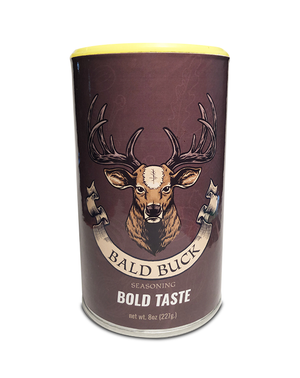
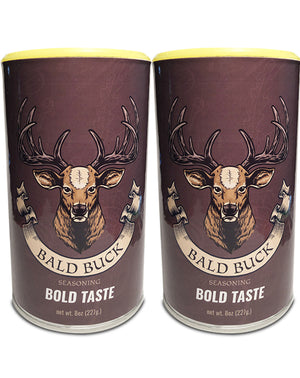
Dry-brine the chicken. Place each breast between two sheets of plastic wrap and pound with a meat mallet or heavy skillet to an even ¾-inch thickness. Pat dry, then season both sides with the Bald Buck Seasoning, pepper, and garlic powder. Set on a plate, uncovered, at room temperature for 30 minutes (or refrigerate up to 4 hours).
Start the shallow pasta water. Fill a wide pot or large skillet with just 2 quarts of water, add 1 tablespoon Bald Buck Seasoning, and bring to a boil over high heat.
Sear the chicken. Heat the olive oil in a 12-inch skillet over medium-high until shimmering. Pat the chicken dry once more and lay it in the pan. Cook undisturbed for 5–6 minutes, until deeply golden, then flip and cook 4–5 minutes more, until an instant-read thermometer reads 155°F in the thickest part. Transfer to a cutting board and rest 5 minutes (it will carry over to 160–165°F). Do not wipe out the skillet.
Cook the pasta. Drop the fettuccine into the boiling water and cook, stirring often to keep it from sticking, until 1 minute shy of the package's al dente time. Just before draining, scoop out 1½ cups of the cloudy pasta water. Drain the pasta but do not rinse.
Build the sauce. Reduce the chicken skillet to medium and add the butter. Once melted and foaming, add the garlic and cook for 60 seconds, scraping up the browned chicken bits, until fragrant but not browned. Pour in the heavy cream, bring to a gentle simmer, and cook for 3–4 minutes, until slightly thickened and reduced by about a quarter. Stir in the nutmeg and pepper.
Toss the pasta. Add the drained fettuccine to the cream along with ½ cup of the reserved pasta water. Toss with tongs over medium heat for 1 minute until the pasta is coated and the sauce clings.
Add the Parmesan off the heat. Remove the skillet from the burner entirely. Add the grated Parmesan a handful at a time, tossing constantly until each addition melts before adding the next. The sauce should turn glossy and smooth. If it tightens up, loosen with more pasta water a splash at a time — the finished sauce should coat the pasta and pool just slightly in the bottom of the pan.
Season and slice. Taste and add up to ½ teaspoon Bald Buck Seasoning. Slice the rested chicken against the grain into ½-inch strips.
Serve immediately. Divide the pasta among warm bowls, fan the chicken over the top, and finish with parsley, extra grated Parmesan, and a crack of black pepper. Alfredo waits for no one — it thickens as it sits, so get it to the table fast.